
IGOUDAR: local authority property, inventoried, put to use and maintained.
IGOUDAR is the EXOSDATA platform for managing the property of Moroccan regions, provinces and prefectures, and municipalities. It keeps the property register in the format set by Law 57-19, runs public domain procedures through to revenue collection, and organises the upkeep of every asset, from the office to the field.
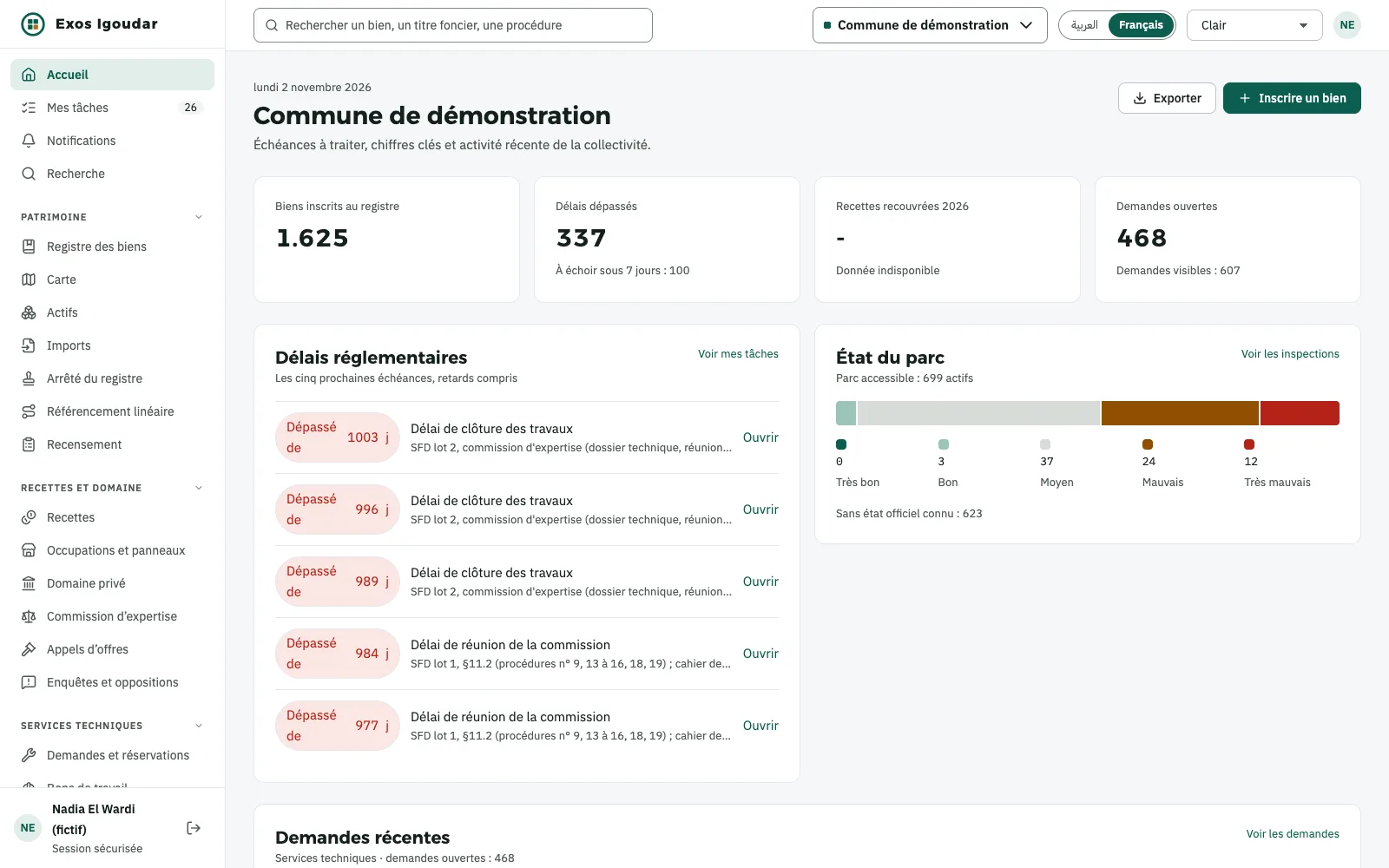
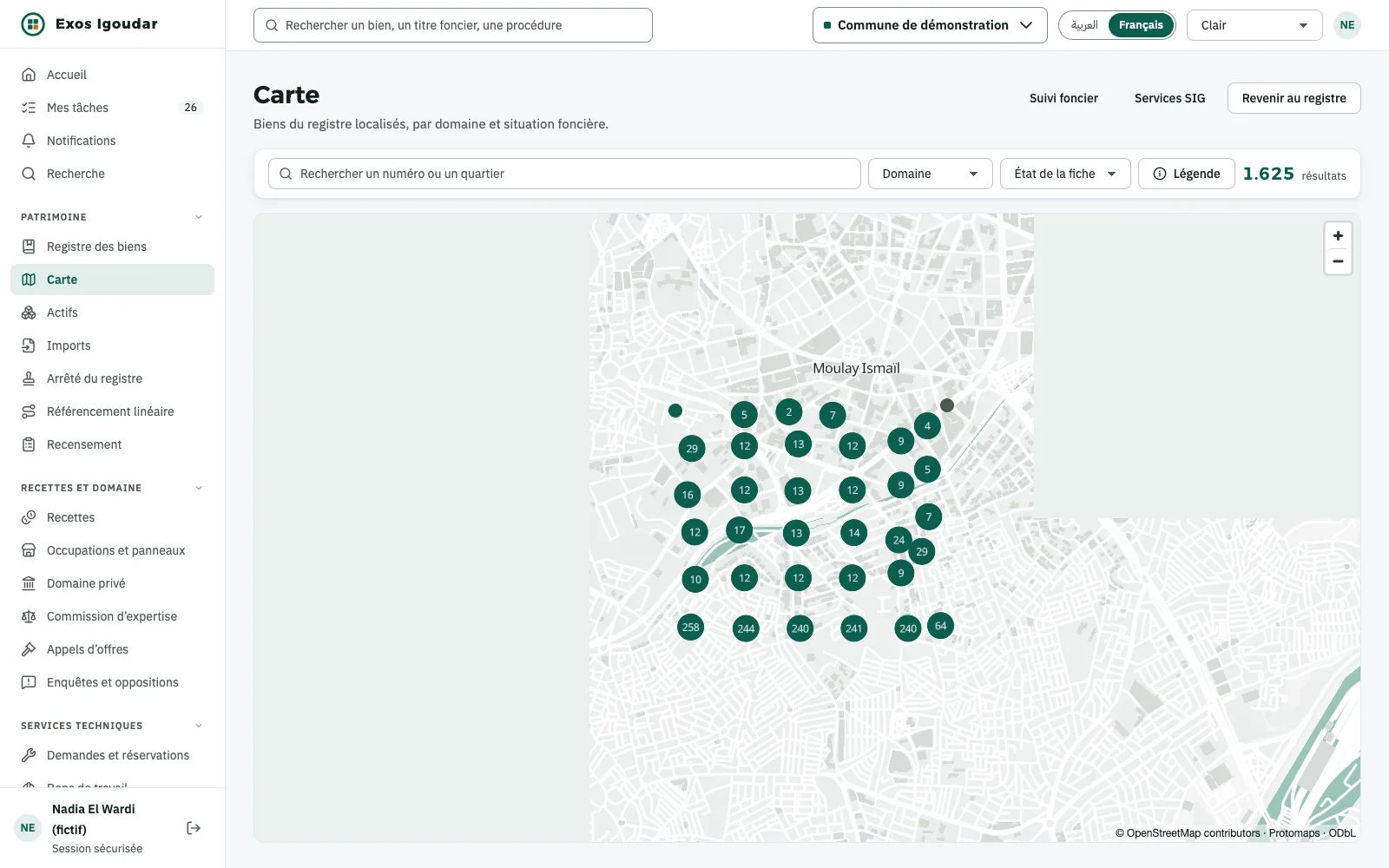
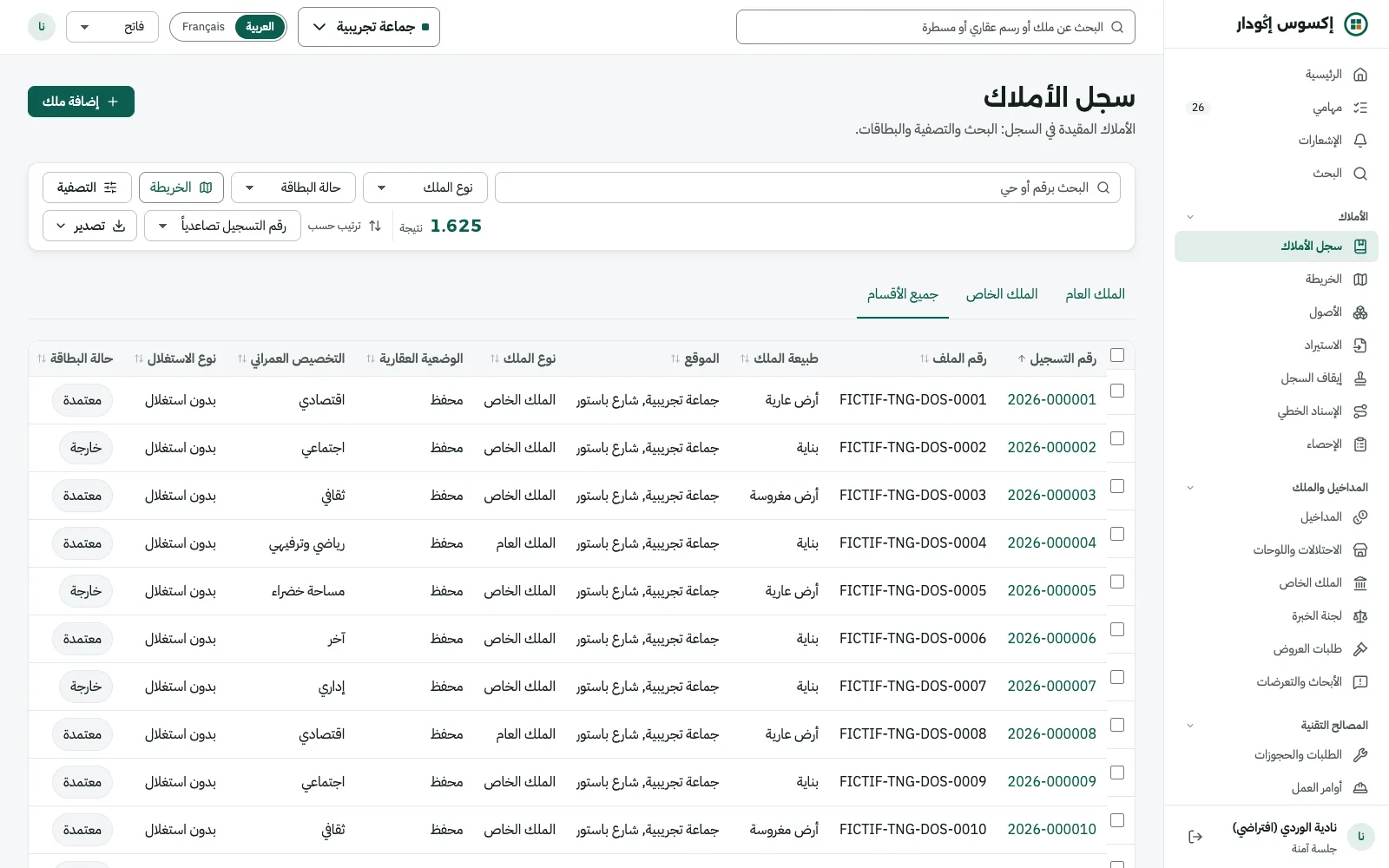
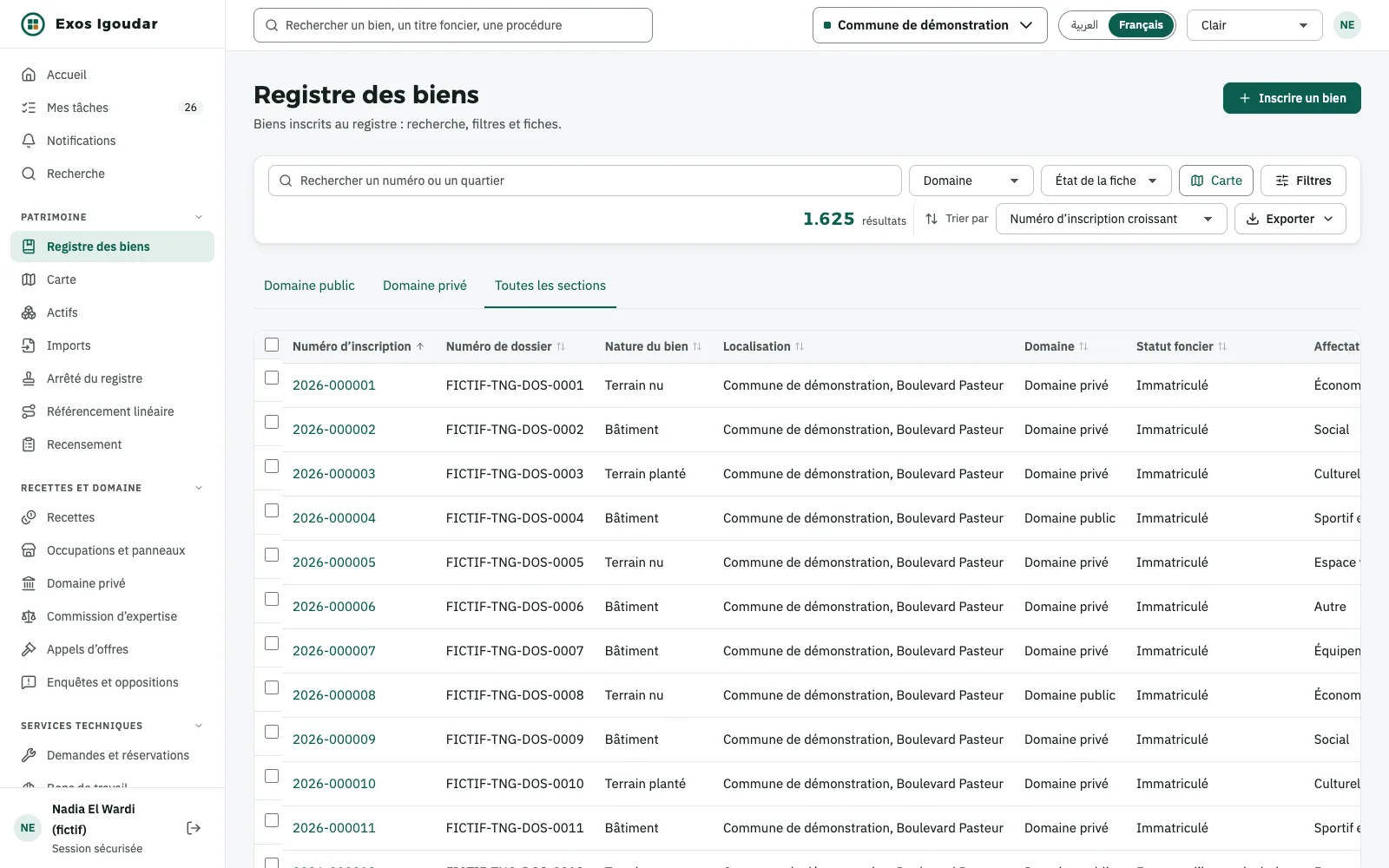
- Law 57-19
- Property register in the format of Order 3710.21
- 19 procedures
- Standard public domain procedures, with their deadlines
- Arabic and French
- End to end, with native right-to-left layout
- Offline
- Mobile app for surveys and field work
- Law 57-19 and its seven implementing orders require a property register in the official format, closed, published and kept up to date.
- Occupation permits, leases, sales and auctions follow procedures subject to approval, with legal deadlines to meet.
- Fees and rents go uncollected when occupation permits live in binders and spreadsheets.
- Off-the-shelf software handles property from a technical angle only, without the Moroccan public domain rules.
IGOUDAR brings the register, procedures, revenue and maintenance together in a single platform.
Law No. 57-19 on the property regime of local authorities and its implementing orders, Official Bulletin No. 7168 of 9 February 2023.
An application for staff, a portal for users.
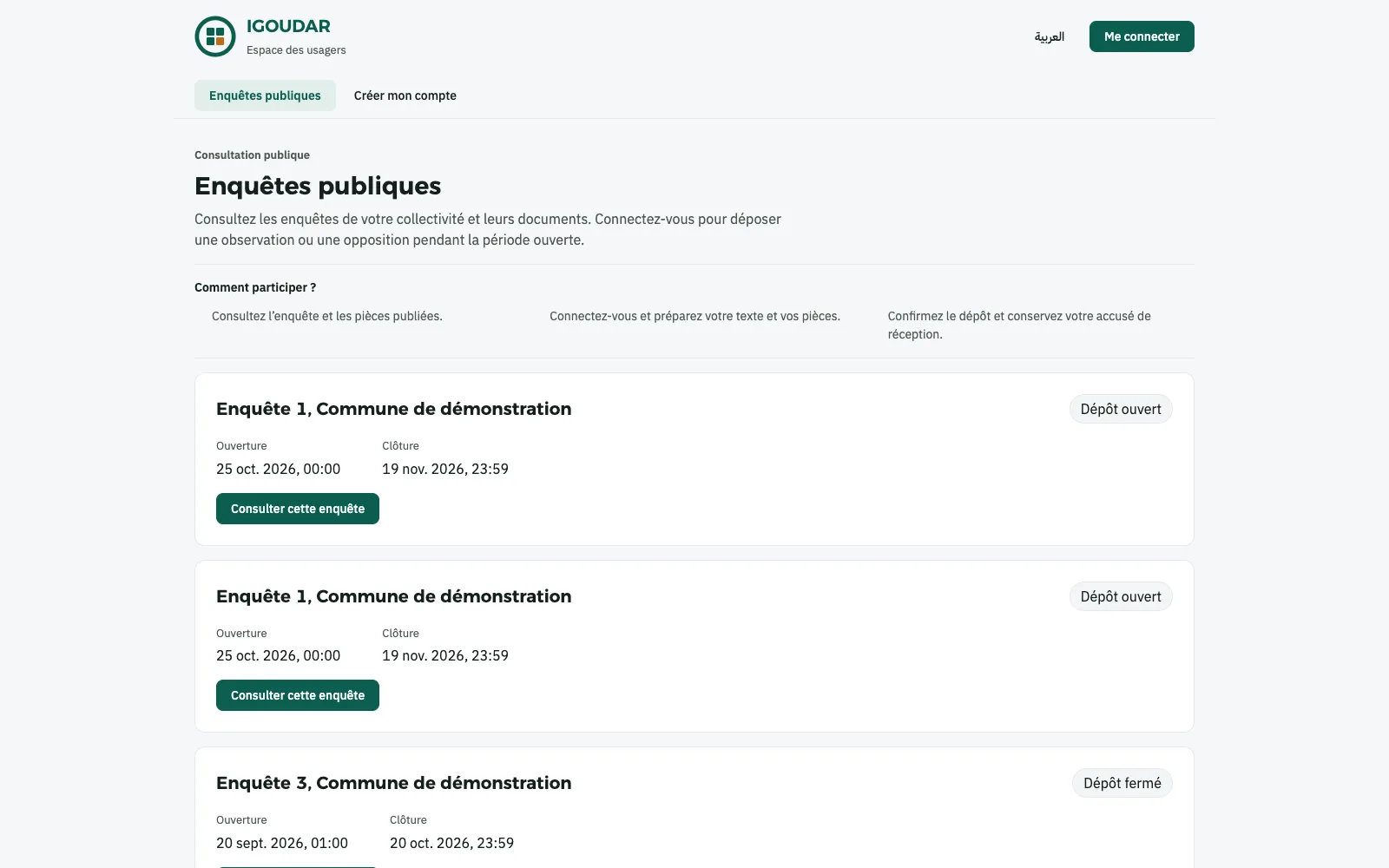
The authority's departments work in the web application, in Arabic or French. Users, occupants and citizens follow their files and public inquiries on the portal.
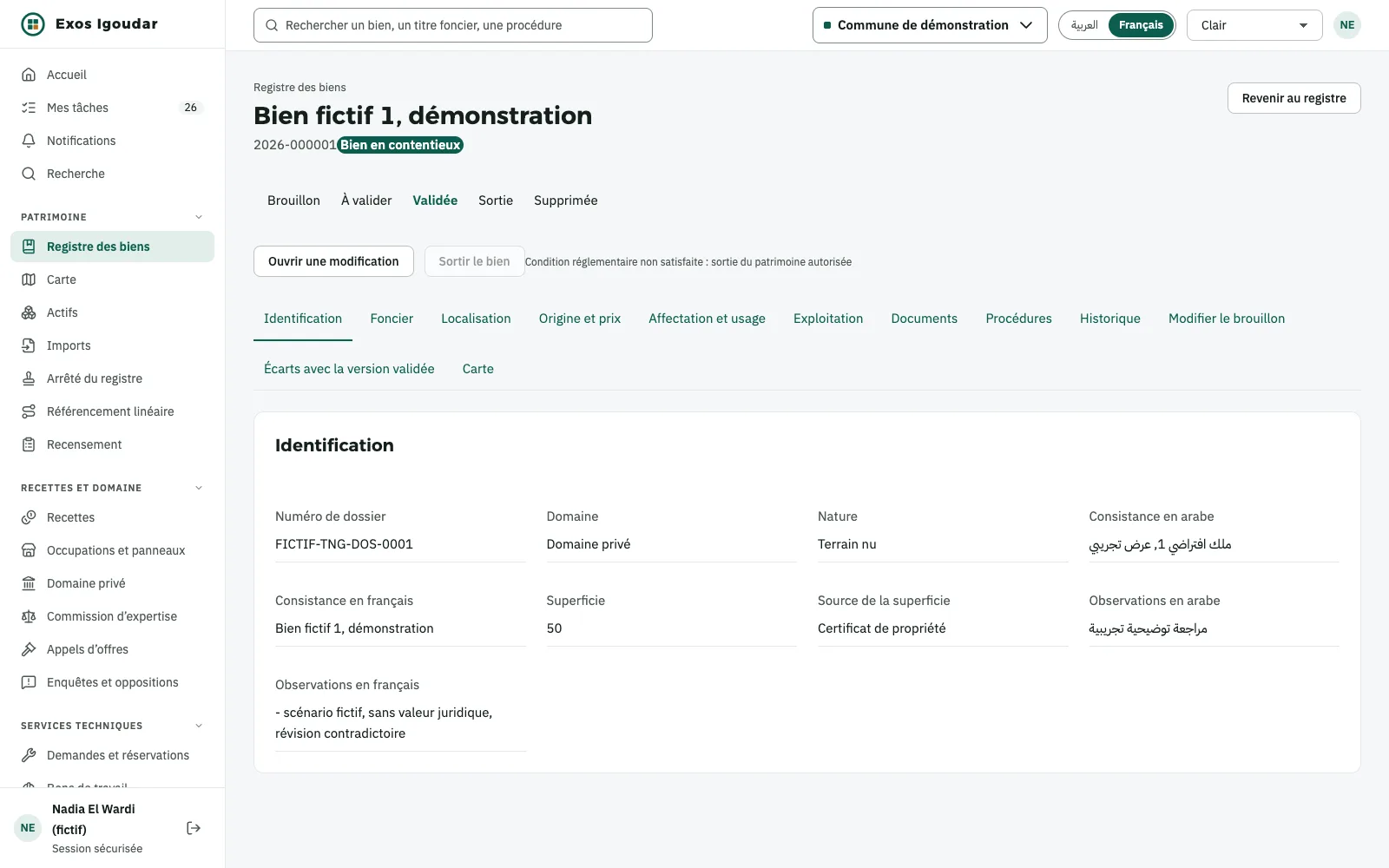
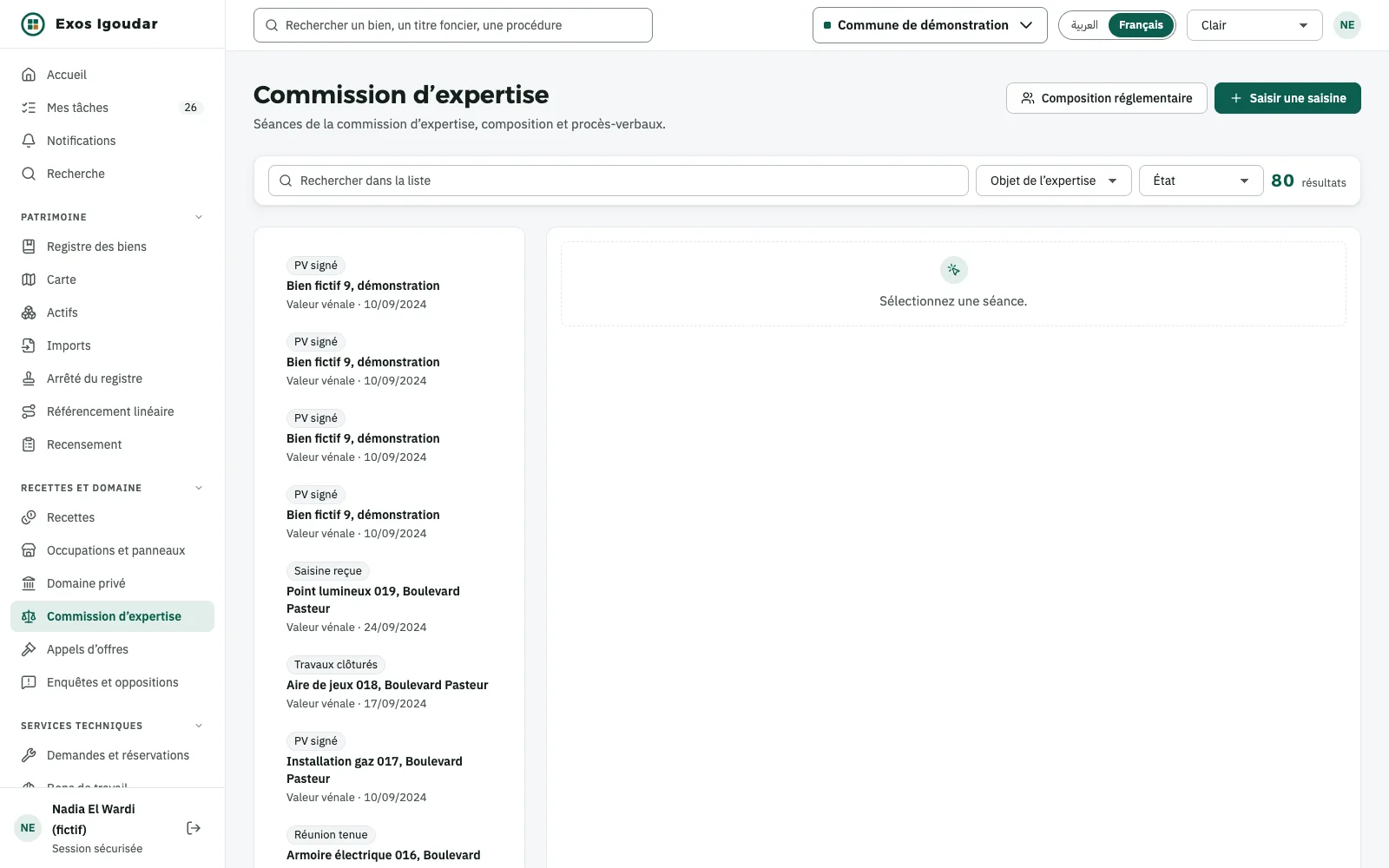
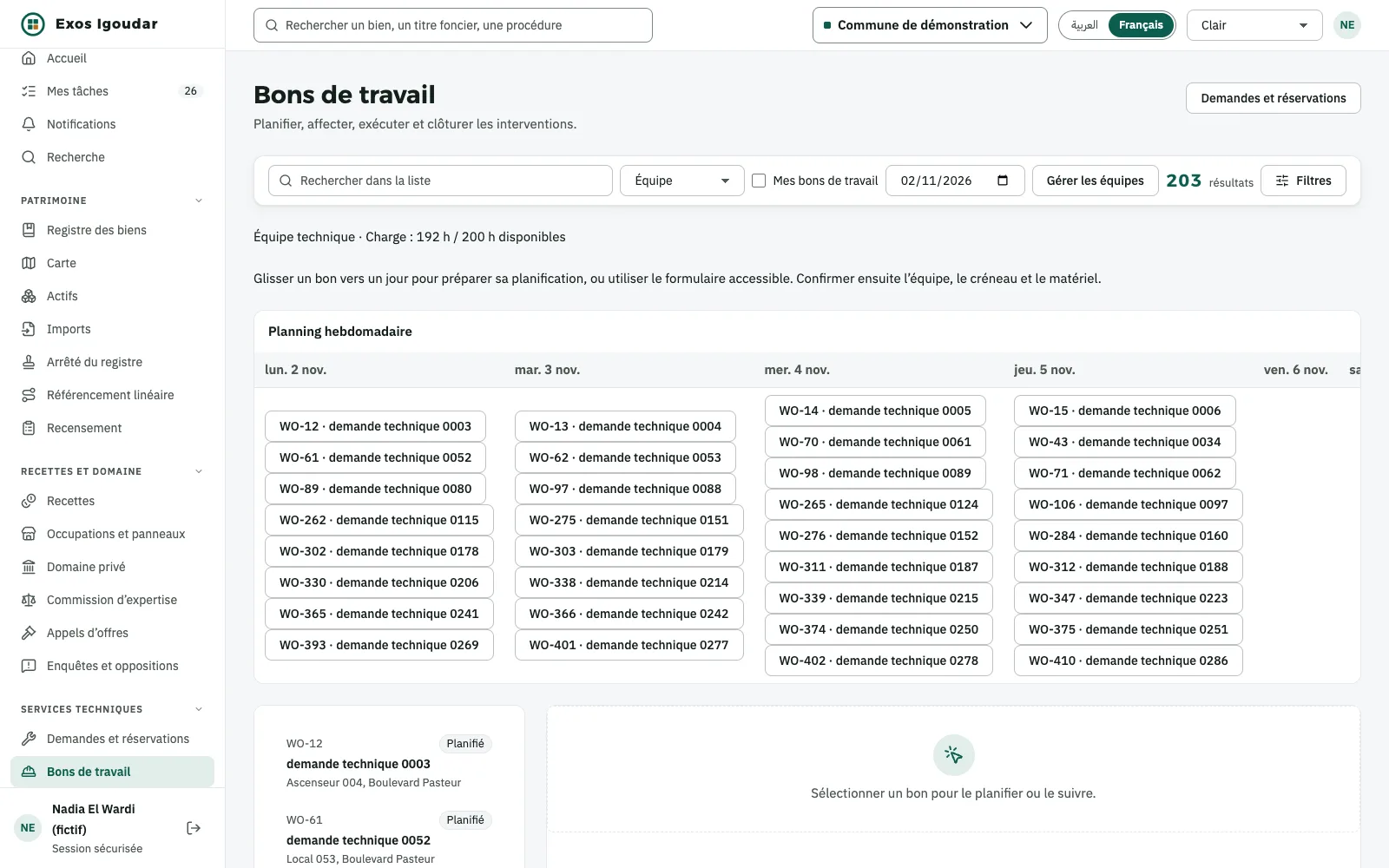
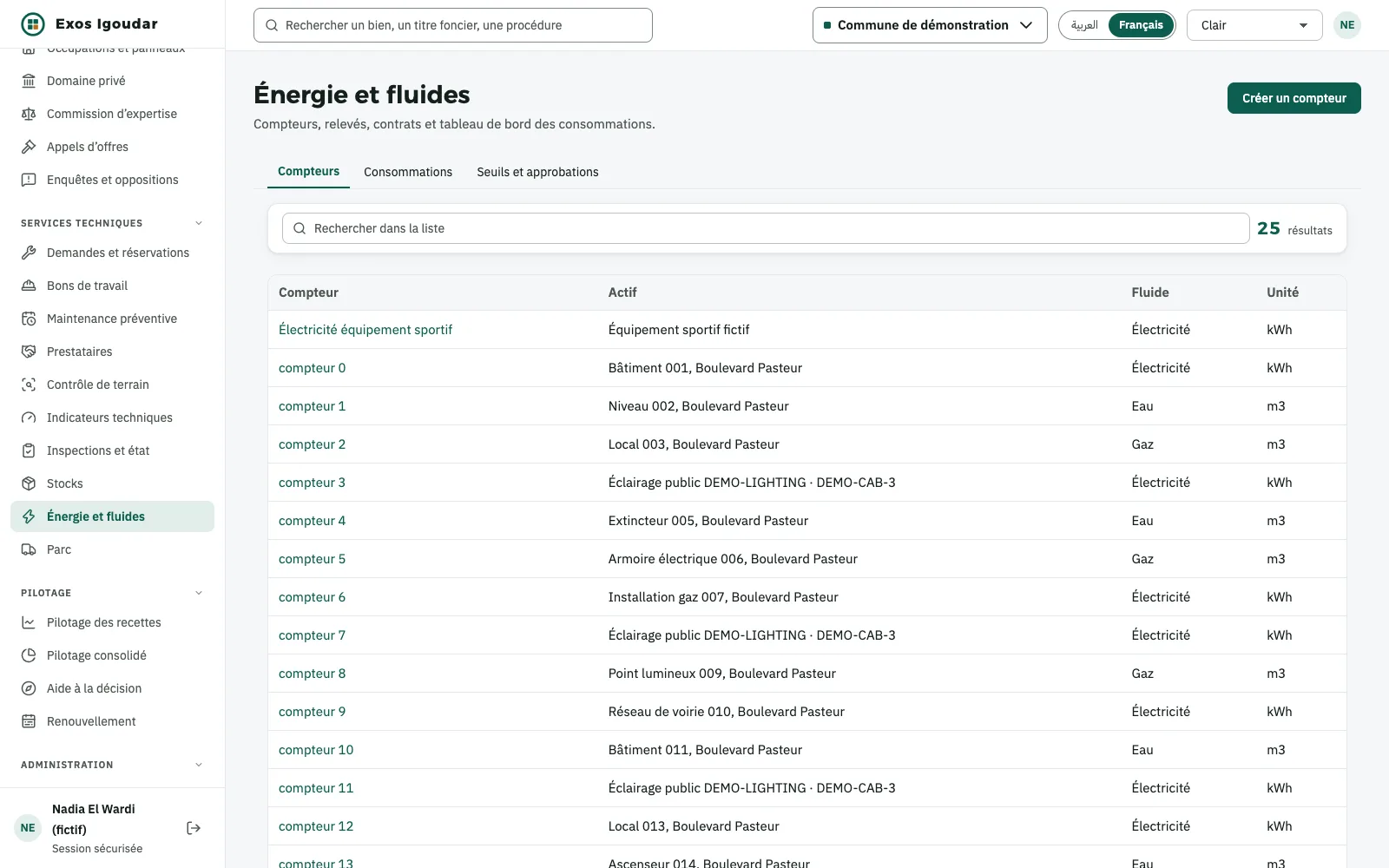
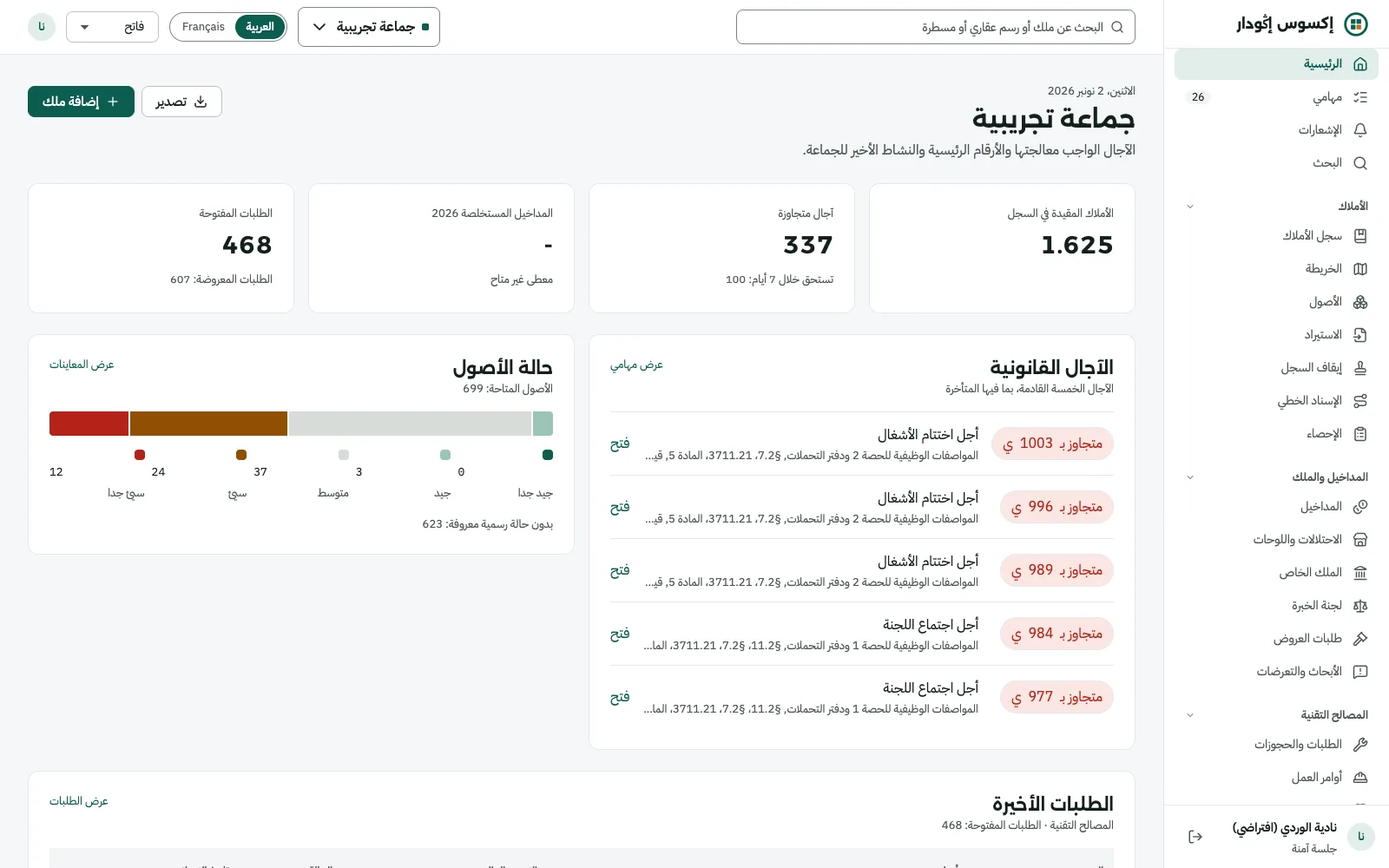
Screenshots taken on the demonstration instance, loaded with fictitious data (assets, people, amounts). The interface is available in Arabic and French.
From the field survey to the revenue collected, in four steps.
Survey
Field agents record assets with the mobile app, even with no network: location, photos, condition, QR code.
Register
Each asset enters the register with its land status and documents. The council president closes the register, which is then published.
Put to use
Occupation permits, leases, sales, auctions: each procedure follows its own workflow and deadlines, through to collection.
Maintain
Requests, work orders, preventive maintenance, energy and fleet all rely on the same register.
The whole of property management, in a single platform.
Property register and land
- Register in the format of Order 3710.21, public and private domain.
- Tracking of land titles, registration and boundary surveys.
- Closing of the register, publication and history of every version.
Mapping
- Map of assets by domain and land status.
- Points, lines and areas: buildings, roads, street lighting, green spaces.
- Linear referencing of roads and networks.
Procedures and deadlines
- The 19 standard procedures of Order 3713.21, with the files submitted for approval.
- Regulatory deadlines computed, alerts before each due date.
- Documents, steps and deadlines set by each authority, with no development.
Occupation permits and private domain
- Temporary occupation of the public domain, advertising signs.
- Leases, sales and exchanges of private domain property.
- Inspection rounds, reports and unauthorised occupations.
Committee and auctions
- Administrative valuation committee: sessions, files, minutes.
- Public auctions: specifications, guarantees, award.
- Digital register of public inquiries and objections.
Public domain revenue
- Payment schedules for fees and rents.
- Revenue orders and reconciliation of payments.
- Reminders and tracking of unpaid amounts.
Technical services
- Work requests with photo and location.
- Work orders, preventive maintenance, contractor agreements.
- Condition inspections and planning of major works.
Energy, fleet and stock
- Meters, bills and consumption per building.
- Vehicles and machinery: servicing, fuel, assignment.
- Warehouses: items, movements, alert thresholds.
Steering and user portal
- Dashboards per authority and regional consolidation.
- User portal: requests, file tracking, due dates.
- Documented REST API, exports in open formats.
A mobile app included, that works with no network.
Surveys and repairs happen where the assets are, often far from any connection. The Android app stores everything on the device and syncs as soon as the network is back.
- Surveys: GPS location, photos, asset condition and QR code scanning.
- Repairs: work orders, before and after photos, time spent.
- Occupation checks: on-site reports, linked to the permit and the asset.
- Deferred sync, with no loss and no duplicates.
Everyone sees what concerns them, and nothing more.
Rights are granted by role and by authority. Whoever prepares a procedure does not approve it, and whoever edits a record does not close the register. Every profile has its own user guide, in Arabic and French.
- Council president and director general of services: approve, sign, supervise.
- Property manager and survey agent: register, prepare files, record in the field.
- Revenue officer, committee member, supervisory authority: collect, sit, approve.
- Technical services, technicians and contractors: plan and carry out repairs.
- Users, occupants and citizens: file a request, track a file, check a due date.
- Municipalities: register, public domain occupation, technical services.
- Provinces and prefectures: their own property and procedures subject to approval.
- Regions: a shared platform, with a separate space for each authority.
- Inter-municipal bodies and public establishments: managing their property and facilities.
Designed for Moroccan local authorities.
- Hosting
- In Morocco: on the authority's own servers or with a Moroccan hosting provider
- Model
- One platform per client, with a separate space for each authority
- Compliance
- Law 09-08 on personal data and Law 05-20 on cybersecurity, built in from the design stage
- Security
- Central sign-on, two-factor authentication, separation of duties, audit log of every write
- Languages
- Full Arabic and French, official documents in Arabic
- Mobile
- Offline Android app, with deferred sync
- Interfaces
- Every external exchange goes through an isolated connector, with a manual fallback
- Reversibility
- Full export of data, documents and settings in open formats (CSV, JSON, PDF, GeoJSON)
- Stack
- Java 25 · Spring Boot 4 · PostgreSQL and PostGIS · React
Igoudar, Morocco's communal granaries.
Igoudar is the plural of agadir, the fortified granary of Amazigh communities. Each family had its own cell, the community kept an inventory of the goods, and a written code set the rules for their safekeeping. Keeping the inventory of common property and looking after it, under the authority of the community: that is the mission of the platform.
It connects to existing tools, it does not replace them.
IGOUDAR does not handle public accounting, human resources, planning permission or civil registration. It exchanges data with those systems and with national platforms instead of duplicating them.